- The latest statements do not establish agreed guarantees.
- Earlier negotiating positions remain dated below.
Update, November 21: Reuters reports that Trump said at his November 20 White House press conference that a broader peace deal must come before discussion of Ukraine’s security guarantees.24
Kushner had described Trump as receptive to an Article 5-like arrangement. Russian Deputy Foreign Minister Ryabkov rejected what he characterised as quasi-membership of NATO for Kyiv, according to state-media reporting cited by Reuters.24
These statements show differing positions, not accepted guarantees or an agreed settlement.
Earlier reporting:
Update, November 20, 16:36 UTC: Financial Times correspondent Christopher Miller reported that the Trump administration had told European and Ukrainian officials it wanted Kyiv to reach a peace agreement with Russia by early January, before Democrats take control of Congress. His original post cites four people briefed on the discussions.23
This is an attributed report about a US objective, not a deadline accepted by Ukraine and Russia or an agreed settlement.
Earlier reporting:
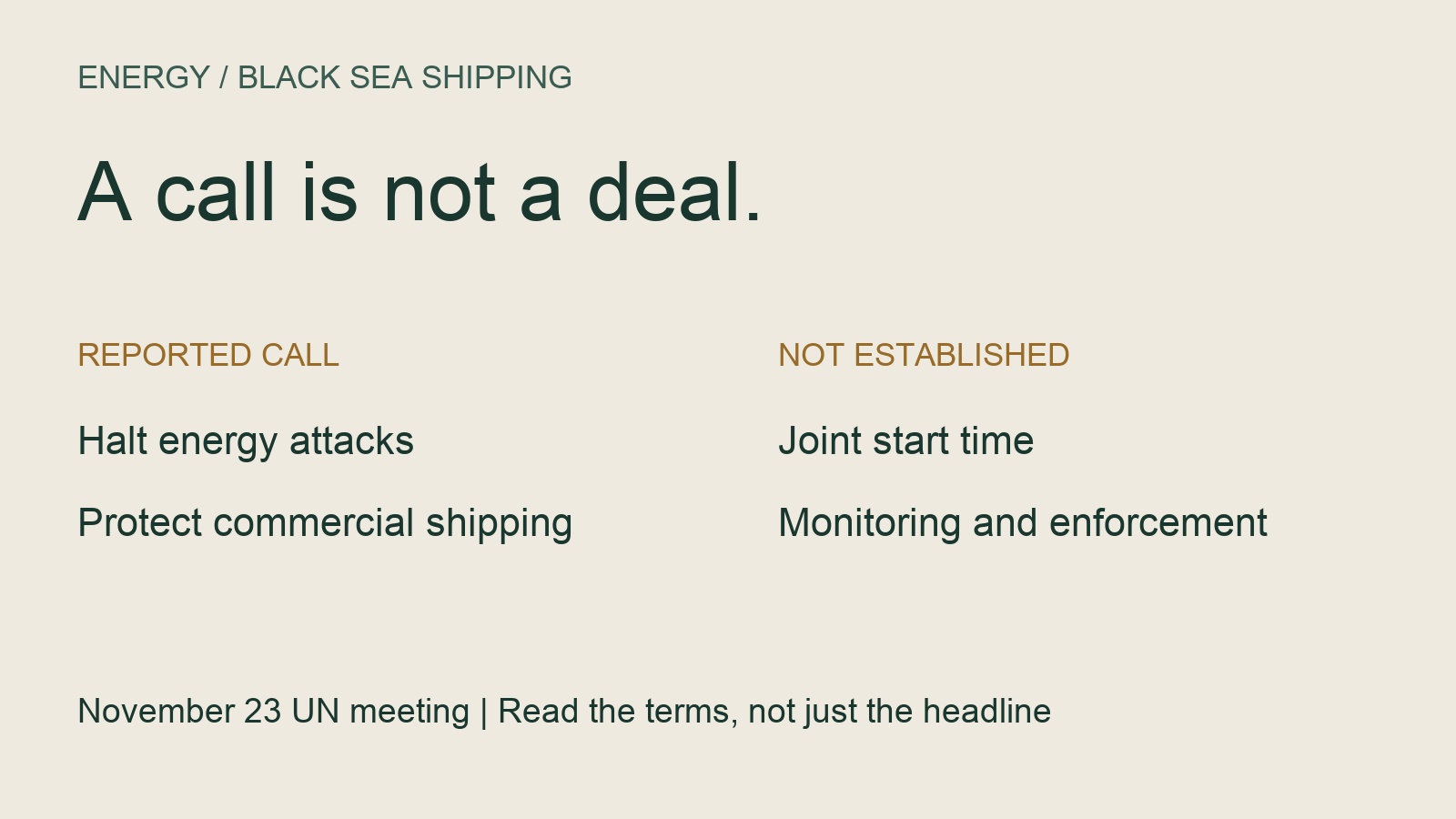
Update, November 20: Following the November 19 Berlin summit, the leaders of Germany, France, Britain and Ukraine called for a winter energy ceasefire and a Black Sea truce for food exports, the Kyiv Independent reported.22
The same report said Vladimir Putin had rejected discussing those truces on November 19, citing the Crimean Bridge strike. These are opposing stated positions, not an agreed ceasefire.22
Earlier reporting, including November 19 travel information:
Travel update, November 19: Berlin police warn of extensive government-district closures throughout Thursday for the security conference. U5 trains will temporarily skip Bundestag station; restrictions also affect district waterways and Berlin airspace. The November 18 notice gives no precise closure timetable and does not say all flights are cancelled.21
Update, November 19, 06:33 UTC: Britain has outlined a £260 million Ukraine support package ahead of the Berlin meeting, including more than 1,000 long-range strike drones. Downing Street says more than 80% of the funding will be spent in the UK.20
The announcement, published November 18 and referring to Thursday's gathering, also covers maritime, logistical and surveillance drones. It describes planned support, not confirmation that the entire package has been delivered. This national commitment does not establish a joint summit agreement or a ceasefire.20
Earlier reporting:
Update, November 19: Zelensky said US representatives would brief Ukraine in Berlin on Trump's talks in Shenzhen, according to the Kyiv Independent's account of his November 18 address.19
He identified air defense and energy support as priorities for the November 19 Coalition of the Willing meeting and called for Ukrainian and European participation in decisions concerning them.19
These are Ukraine's stated objectives and an announced briefing, not a completed summit, a joint participant list or an agreed ceasefire.
Bloomboff's take
Representation matters because the people who bear a decision's costs should have a voice in making it. That principle also applies to money: households should be able to hold savings under rules they can verify, rather than depend entirely on institutions negotiating over their future. Bitcoin offers that monetary choice through predictable issuance and direct custody. It does not negotiate a ceasefire or supply air defenses.
The practical case is individual agency alongside diplomacy. Teaching monetary literacy, safe self-custody and recovery through simulations gives people tools to exercise that choice without handing their keys to another intermediary.
Earlier reporting:
Update, November 17: European Council President António Costa’s official schedule lists a Coalition of the Willing meeting on Ukraine in Berlin on Thursday, November 19.18
The calendar supplies a date for the gathering announced earlier. It does not establish Russian participation, a completed meeting or an agreement to end the war.18
Earlier reporting:
Update, November 17: EU foreign ministers said a ceasefire and security guarantees for Ukraine should be the first results of the peace process, according to the Council’s account of its November 16 meeting. Ukrainian Foreign Minister Andrii Sybiha briefed them on the Abu Dhabi talks.17
This sets out the EU ministers’ preferred sequence. It does not establish that Russia, Ukraine and the United States have agreed to that sequence or reached a ceasefire.17
Earlier reporting:
Update, November 17: In his November 16 evening address, Volodymyr Zelenskyy said Ukrainian, US and European negotiating teams had held another discussion, with Steve Witkoff and Jared Kushner joining online. He said the partners would meet in Berlin within the Coalition of the Willing to develop joint negotiating steps.16
His address gives no date for that meeting and does not establish Russian participation or agreement on a settlement. The announced Berlin gathering should not be confused with a confirmed next round of talks involving Russia.16
Earlier reporting:
Update, November 16: Jared Kushner said he and Steve Witkoff spoke with Russian presidential aide Yuri Ushakov, then held a call with Ukraine and European partners. He named national security advisers from Germany, France, Britain, Poland and Italy, plus EU and NATO representatives.15
Kushner said they discussed facilitating direct Europe-Russia engagement and began preparing the next multilateral meeting’s agenda. He gave no date or venue. His statement describes diplomatic work, not a jointly agreed participant list or settlement. He said any final peace agreement would require both Russia’s and Ukraine’s consent.15
Further reporting, added 14 November 2026:
European Council President António Costa said on November 13 that leaders had agreed Europe’s negotiating team would comprise EU institutions and the E5 group of the Coalition of the Willing. His accompanying statement named France, Germany, Italy, Poland and the United Kingdom.1314
This establishes Europe’s announced choice of representation. It does not establish a participant list agreed by all negotiating sides or a peace settlement.
Earlier reporting:
Further reporting, added 14 November 2026:
RFE/RL reported on November 13 that Jared Kushner said both sides had agreed to include European partners in the next round of Ukraine negotiations. Kremlin spokesman Dmitry Peskov said a decision on an expanded format depended on Europe’s readiness to contribute. These statements do not establish a jointly confirmed participant list or a peace agreement.12
Earlier reporting:
Update, 12 November, 22:58 UTC
Zelenskyy said he met Steve Witkoff and Jared Kushner in Ireland on November 12 after this week’s negotiations. He said prisoners would be released and expressed hope for the war’s largest exchange, without giving a number or date.11
He also said European representatives were being involved more actively and further multilateral meetings were being prepared. His statement does not confirm a completed exchange, an agreed European delegation or a peace settlement.11
Earlier context:
Further context, 12 November, 01:41 UTC
The Irish Times reported on November 11 that Zelenskyy expected the US envoys to brief him in Dublin on prisoner exchanges and security guarantees. He rejected surrendering the Donbas. Irish Prime Minister Micheál Martin said European leaders would discuss representation in negotiations on November 13. These are stated positions and planned discussions, not a new agreement.10
Earlier context:
Further context, 11 November, 16:57 UTC
Reuters reported that Vladimir Medinsky said the Abu Dhabi talks produced common understanding on some issues, but disagreements remained. He said a European security framework was central to the talks and questioned European participation, citing what he described as a lack of concrete proposals. Those are his positions, not an agreed exclusion of Europe.9
Earlier update:
Update, 11 November, 13:26 UTC
Rustem Umerov confirmed that two days of talks in the UAE produced an agreement on a large-scale prisoner-of-war exchange. He said the details and practical implementation were still being finalised. His statement does not announce a completed exchange.8
Umerov said the trilateral talks also covered peace and Ukraine’s post-war reconstruction. He said significant differences remain, alongside opportunities to continue negotiations. Agreement on the exchange therefore does not establish agreement on the wider war settlement.8
Earlier update:
Update, 11 November, 12:41 UTC
TASS quoted Russian Lieutenant General Alexander Zorin, a participant in the Abu Dhabi talks, saying Russia and Ukraine may exchange prisoners of war in the next two to three weeks. This is his stated possibility, not a confirmed exchange date or report of completion.7
Earlier update:
Update, 11 November, 11:44 UTC
Sky News reported Jared Kushner saying Russia and Ukraine had agreed a large-scale prisoner exchange after the Abu Dhabi talks. Its post gives no prisoner count or exchange date and does not report a completed exchange.6
Earlier update:
Update, 11 November, 09:42 UTC
Xinhua reported that Russia, Ukraine and the United States resumed face-to-face talks in Abu Dhabi on Wednesday. Its statement does not announce an agreement.5
Earlier reporting:
AP reported that Tuesday’s first round of U.S.-mediated Russia-Ukraine talks in Abu Dhabi ended after nearly four hours, citing RIA Novosti. Another session was expected Wednesday, according to Ukraine’s foreign intelligence service.2
AP’s account does not announce an agreement.2
Update, 10 November, 18:10 UTC
TASS reported beforehand that Kremlin spokesman Dmitry Peskov said talks would address the parties' security guarantees, with details discussed behind closed doors. This was an announced agenda, not a report of agreed guarantees.3
The UAE Foreign Ministry said Sheikh Abdullah bin Zayed attended the opening of talks between Russia, Ukraine and the United States in Abu Dhabi on November 10. It described the host's role as bridging differences through dialogue and de-escalation.4
Earlier reporting:
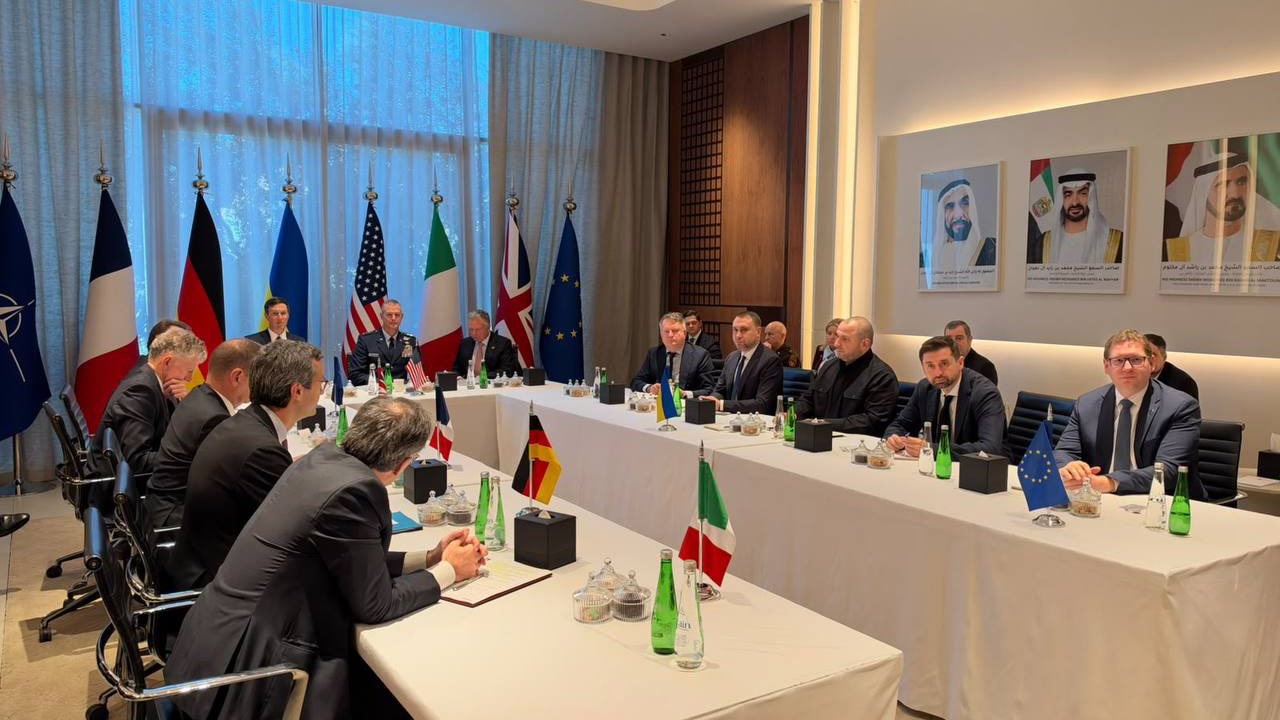
In a November 10 post, Rustem Umerov said Ukraine’s delegation had begun work in the United Arab Emirates. His stated schedule put consultations with European partners and U.S. envoys before a planned Ukraine-U.S.-Russia meeting.1
He listed ending hostilities, post-war security guarantees, economic recovery and humanitarian efforts as priorities. These are negotiating aims, rather than announced achievements. The accompanying photograph shows delegates around a table. The statement does not report an agreement, and the picture cannot establish one.1